


HEXA FIRE
Terra Robotics


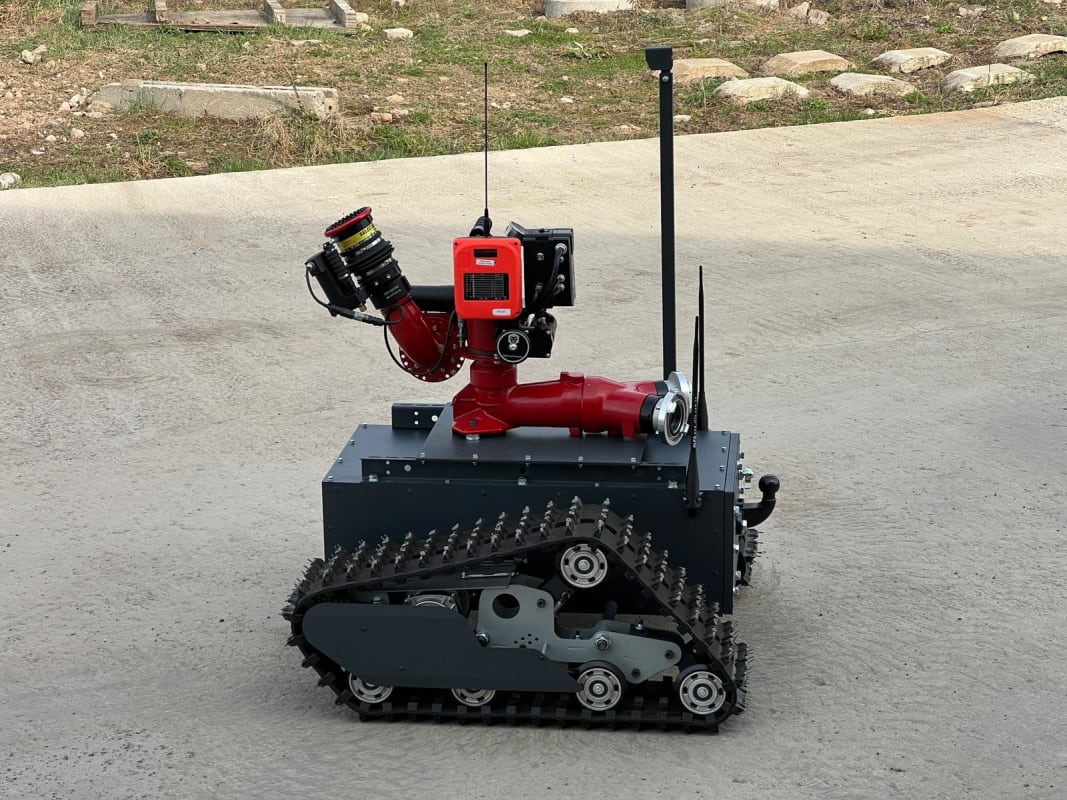
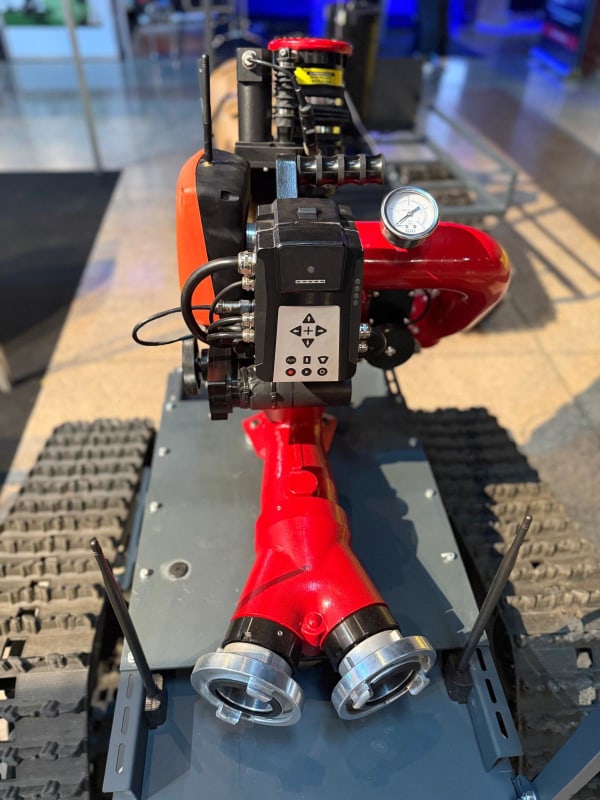
Unmanned firefighting robots are specialized ground vehicles (UGV) designed to extinguish fires in hard-to-reach areas, complex terrain, in halls and buildings at risk of collapse, and in locations posing a threat to human life, such as areas with high temperatures, smoke, explosion hazards, or toxic fumes.
Main tasks:
- Extinguishing fires in fuel storage facilities, chemical plants, tunnels, and industrial halls.
- Assisting the fire department during disasters and building fires.
- Terrain reconnaissance (thermal imaging camera, gas detectors).
- Transporting equipment, hoses, firefighting supplies, or injured persons.
The robot was designed to operate in the most extreme conditions: on uneven terrain, in extremely high temperatures, in cold conditions, and in high humidity.
Offering flexible firefighting solutions, the robot uses water, emulsion, and foam, dynamically adjusting their flow rate from 1,200 to 4,800 l/min. This adaptive system conserves water while effectively fighting fires—from small incidents in residential buildings to large-scale industrial fires.

Click to open gallery
No items found.
THIS COMPANY OFFERS SOLUTIONS FOR
Terra Hexen is a recognized European leader in unmanned technologies and counter-drone systems. From this foundation, the company has launched TERRA ROBOTICS™, a specialized spin-off focused on the design and manufacture of unmanned ground vehicles (UGVs), developed and produced entirely in Poland.
TERRA ROBOTICS delivers tracked UGV platforms engineered for high-risk and demanding environments, supporting missions such as reconnaissance and surveillance, border protection, critical infrastructure security, logistics, evacuation and rescue, firefighting, and operations in hazardous or inaccessible areas.
The company’s portfolio includes modular, mission-ready platforms such as HEXA 50, HEXA 300, and HEXA FIRE, offering superior mobility, stability, and payload capacity for defence forces, emergency services, and security agencies. Participation in SSD Expo 2026 reflects Terra Hexen’s commitment to strengthening regional security through advanced, reliable ground robotics solutions.

2016
founded

up to 20
employees

2 mln
Reveneue


